

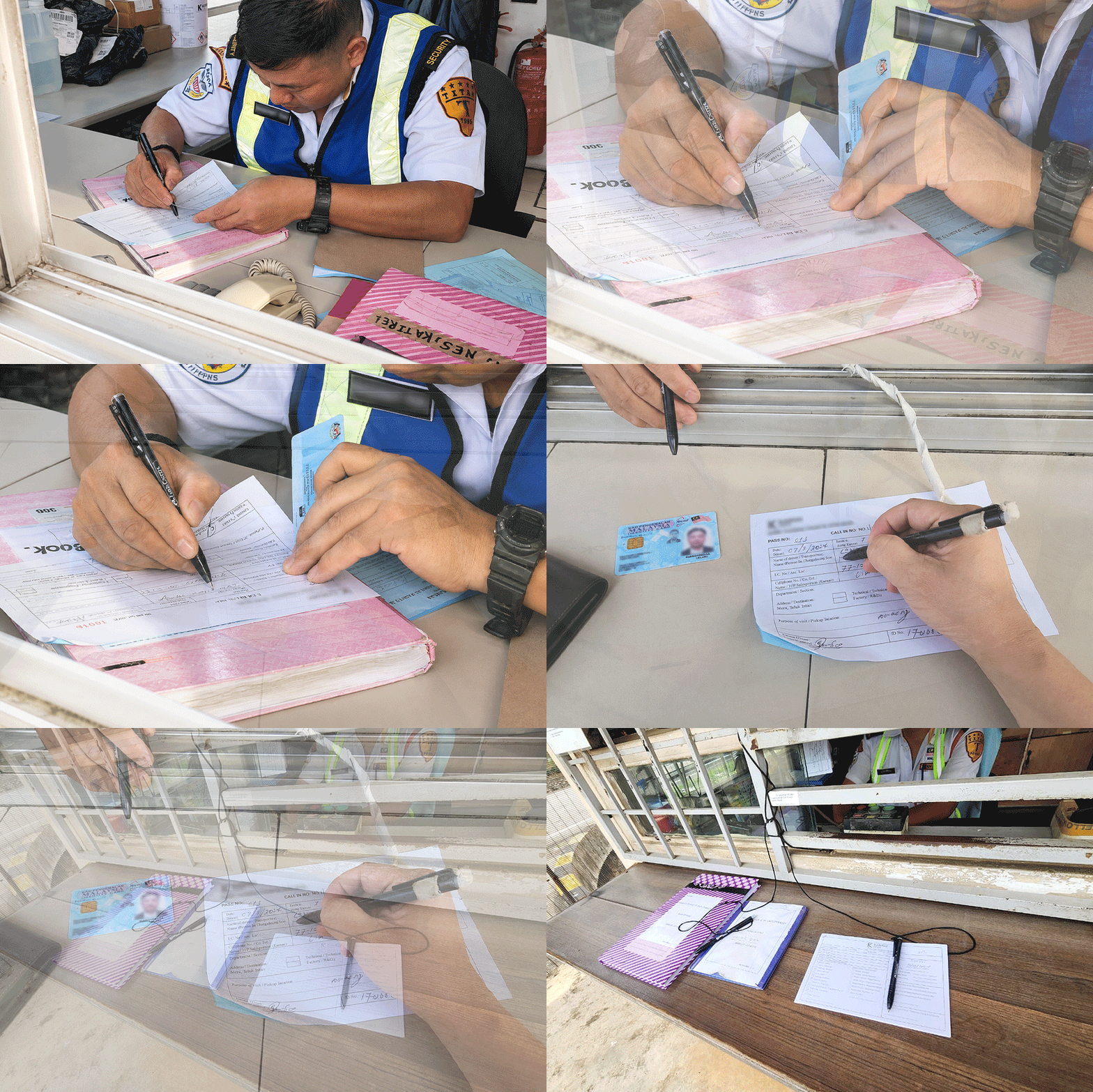
Factory Visitor Safety Shouldn’t Depend on Paper
Many factories still rely on visitor log books, paper safety declarations and manual safety briefings. When an accident happens, proving what the visitor acknowledged becomes difficult.
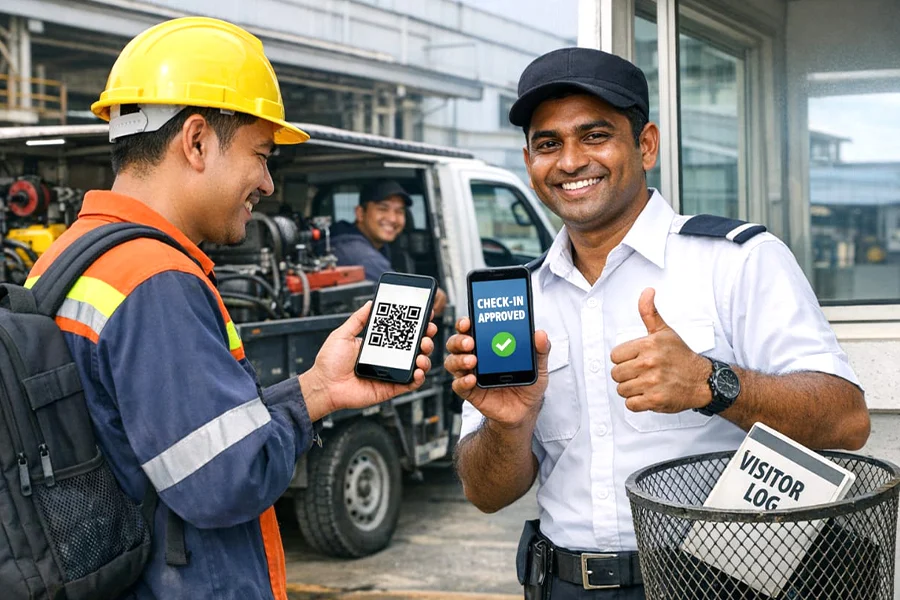
Digitalize your visitor safety process with MagNicas Visitor Management System.
- No manual visitor log book.
- No stacks of signed safety forms.
- No 15-minute safety briefing before every visit.
- Every acknowledgement is securely recorded online.
Watch Digital Visitor Safety in Action
The Pain
Exposed to visitor safety liability
Visitor manual log book and paper safety forms make visitor acknowledgement difficult to prove after an incident.
Slow visitor approval from multiple approvers
Waiting for signatures delays visitors and frustrates everyone.
Containers stuck at the guardhouse
Manual registration creates long queues and slows factory operations.
Fraud and loading disputes
Without visual evidence, proving what entered or left becomes difficult.
See How It Works
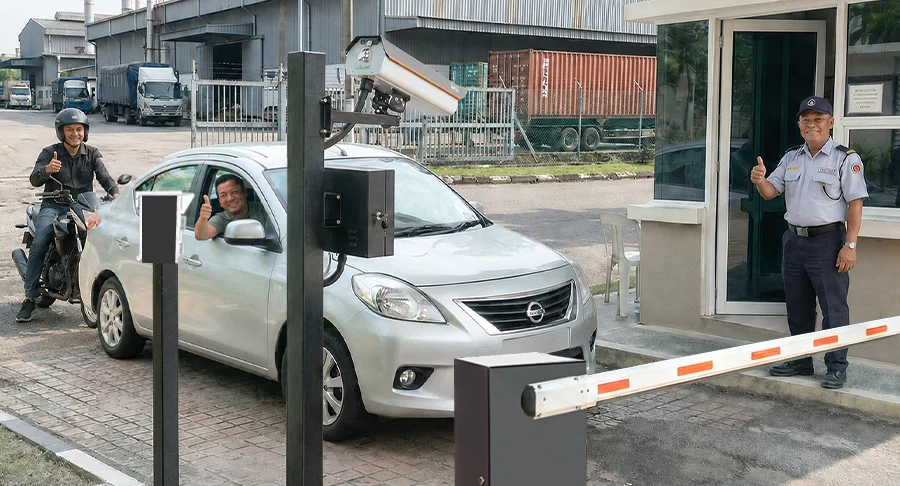
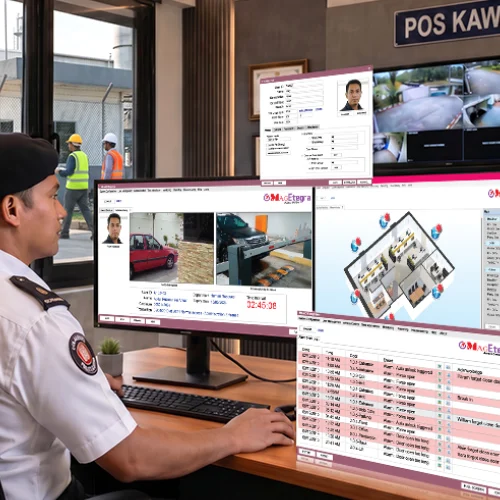
From visitor safety to truck evidence and staff entry, watch how AI Guardhouse digitalize the entire factory entrance workflow.
Why Choose MAG Products?
BG856 Spring-Free Barrier Gate
Spring-Free RedSpeed™
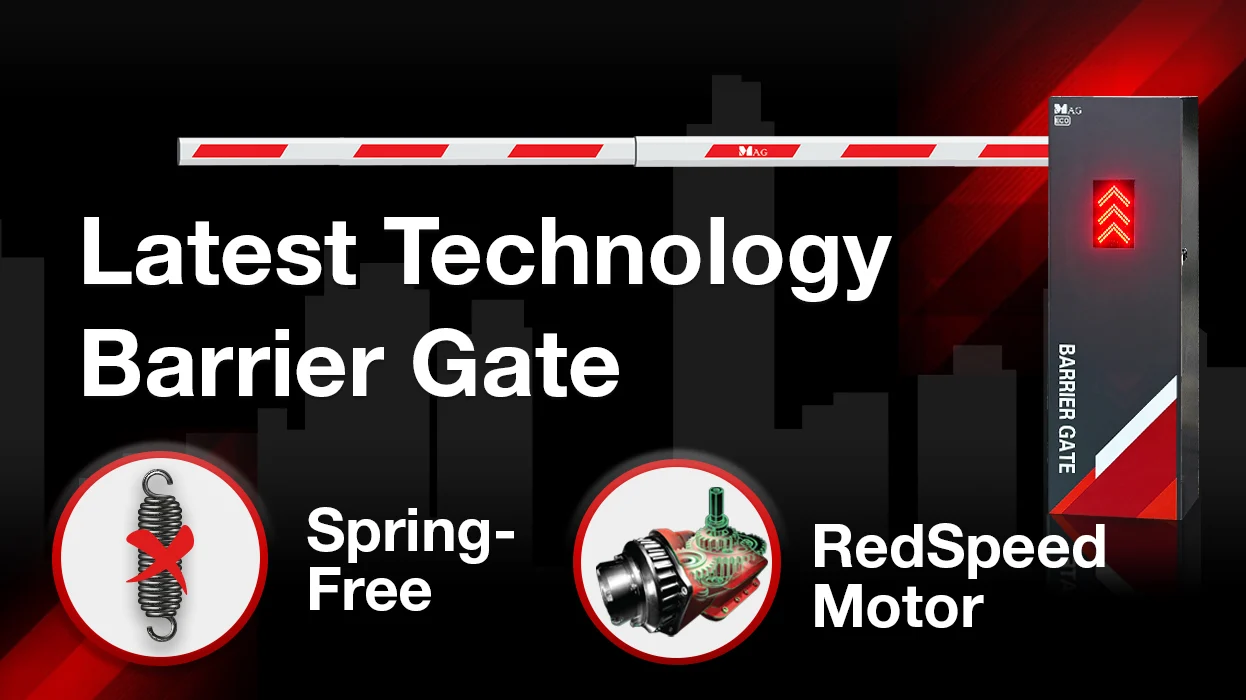
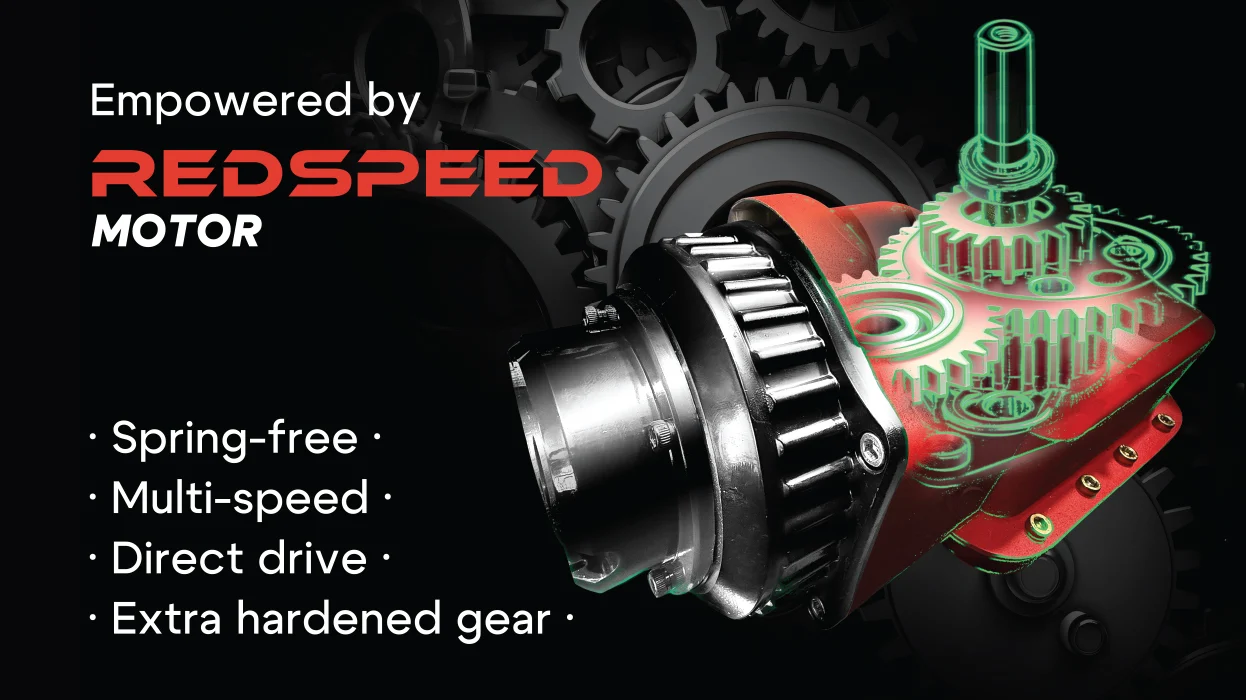
- Almost zero maintenance.
- Local spare part and repairing service.
SNP141 AI LPR
Trained for Malaysian plates.
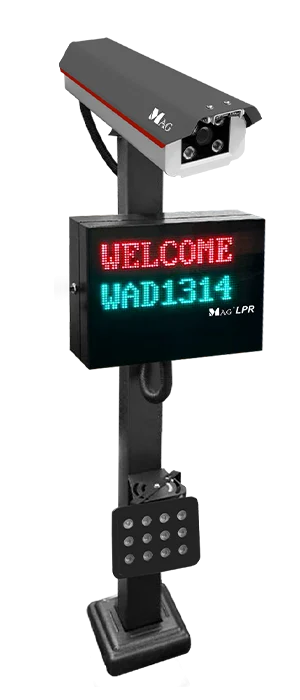
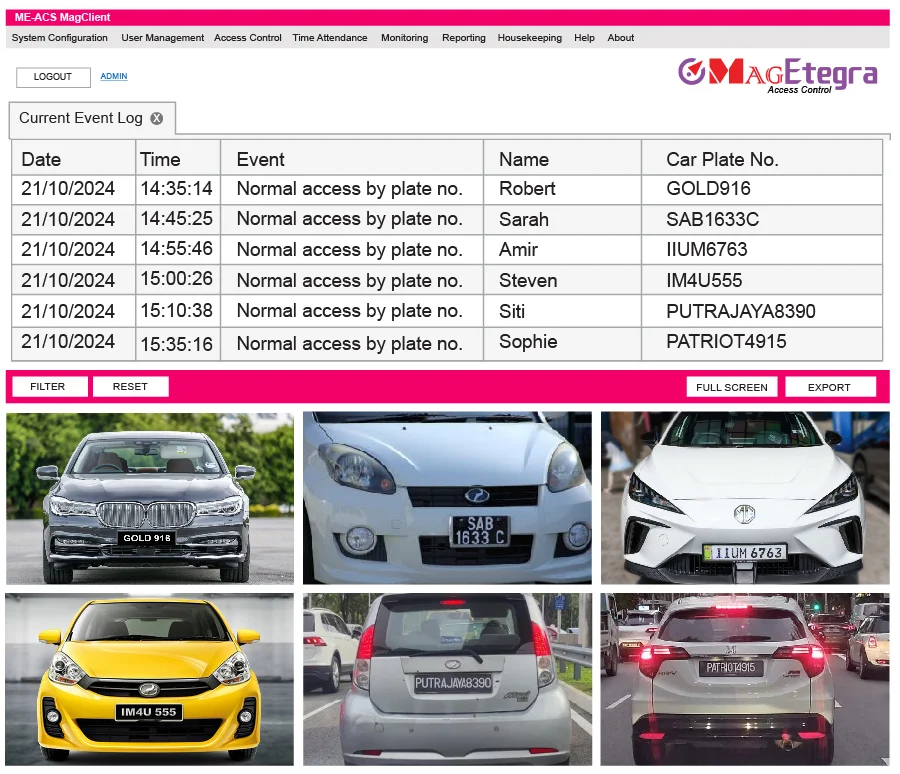
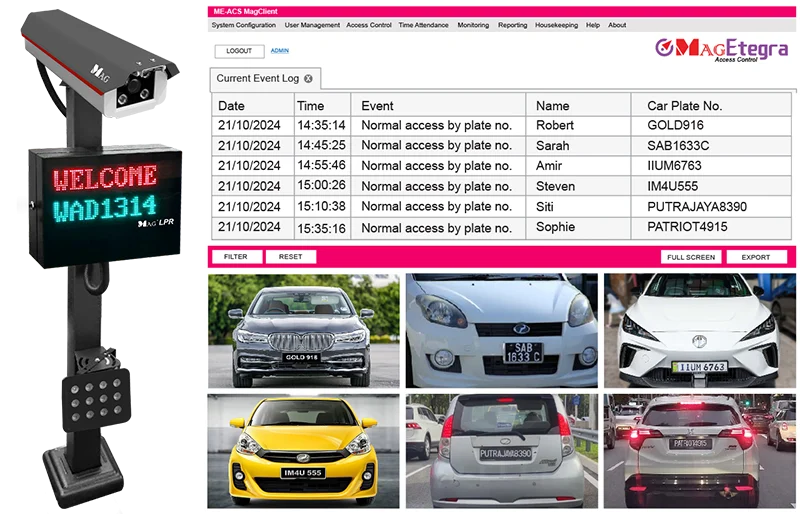
- Better recognition.
- Less manual correction.
FA151 Outdoor Face Recognition
Waterproof outdoor face and fingerprint recognition.
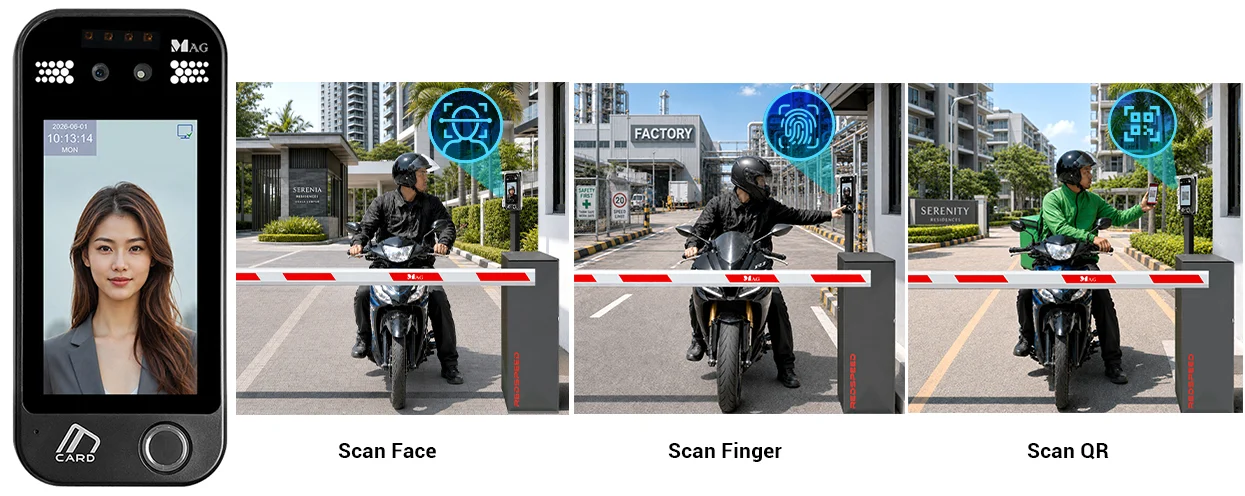
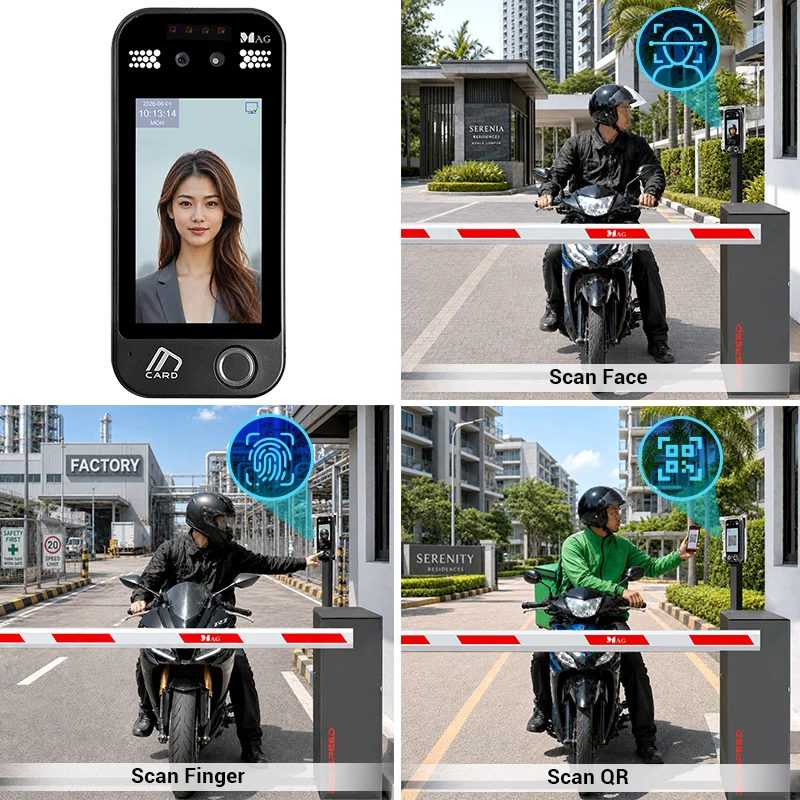
- Another way to enter when LPR isn’t enough.
- Ensure all motor riders access are recorded.
MagNicas Hybrid Cloud Access Control
Manage anywhere. Anytime.
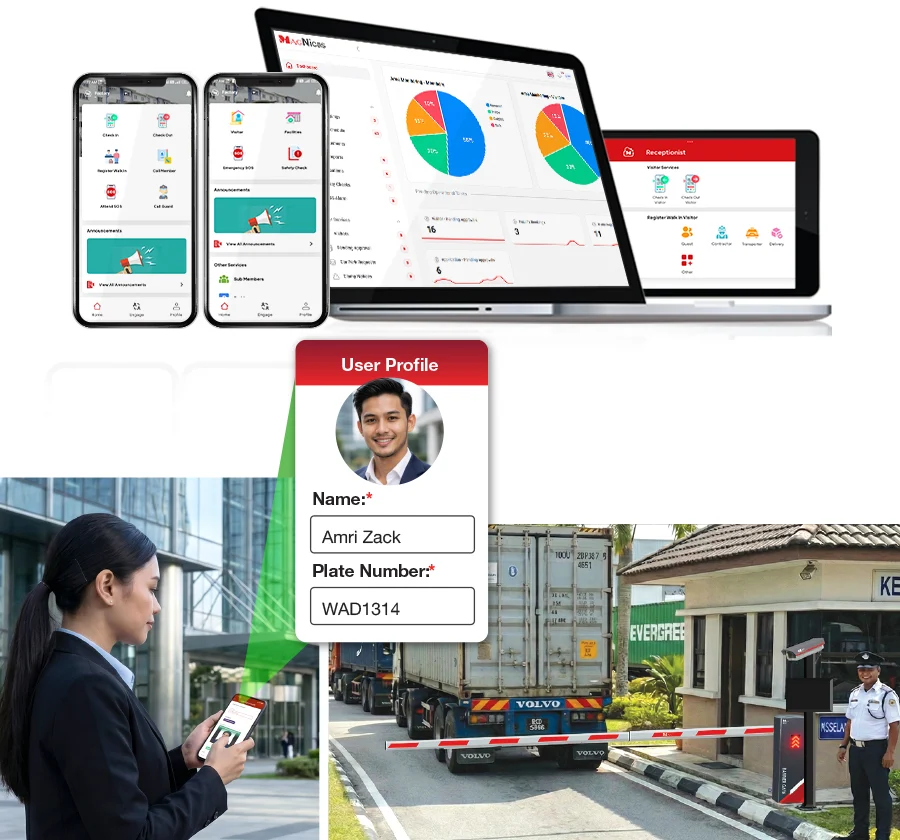
- More convenient and faster.
- Staff, visitors, contractors and access from your phone.
MagEtegra On-Premise Access Control
Advanced security made simple.
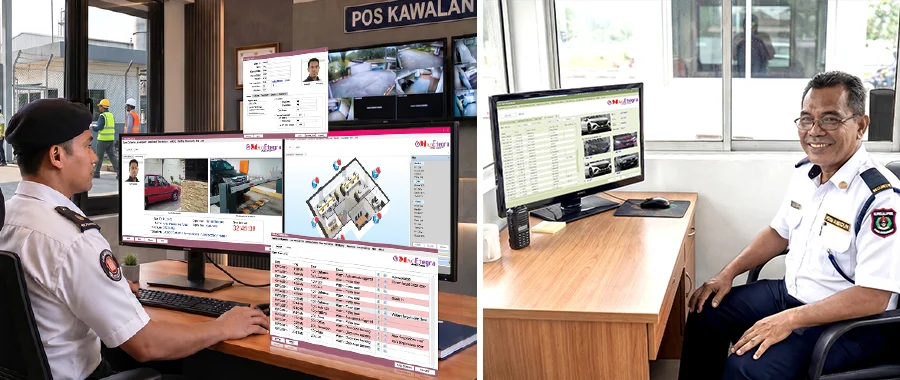
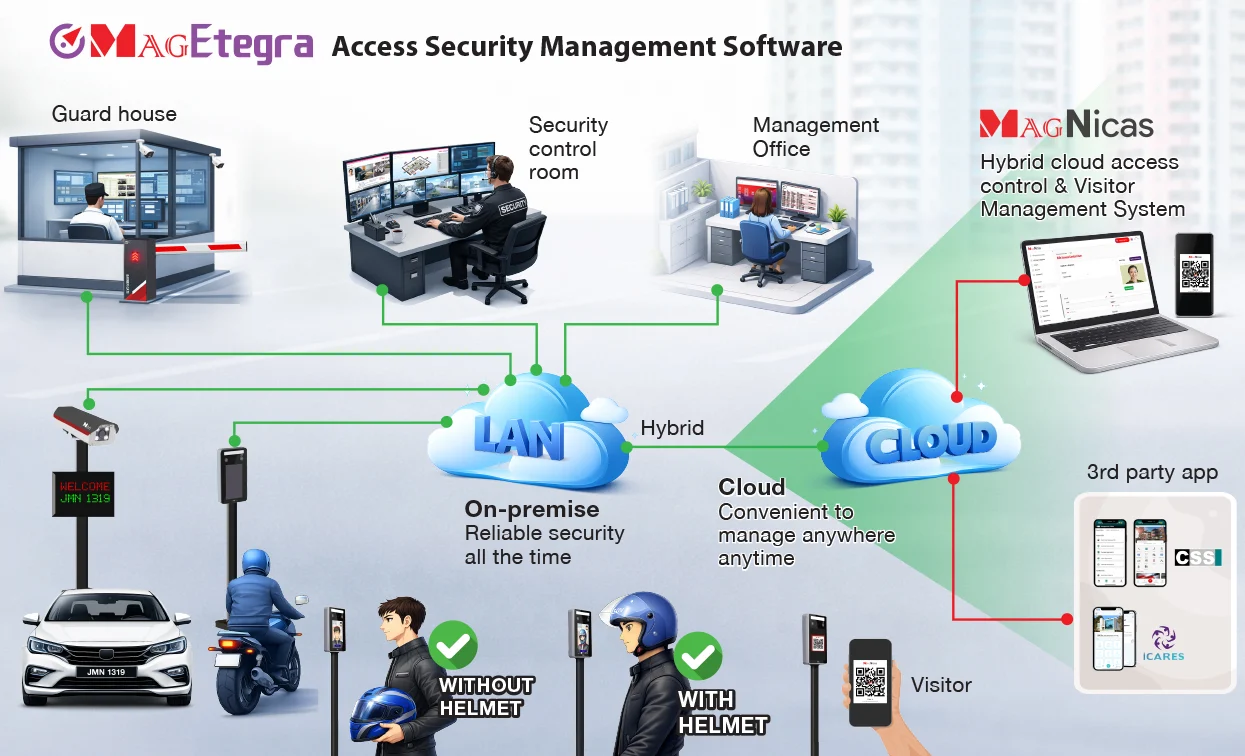
- Reliable on-premise operation.
- No dependency on internet.
Book a Live Demo
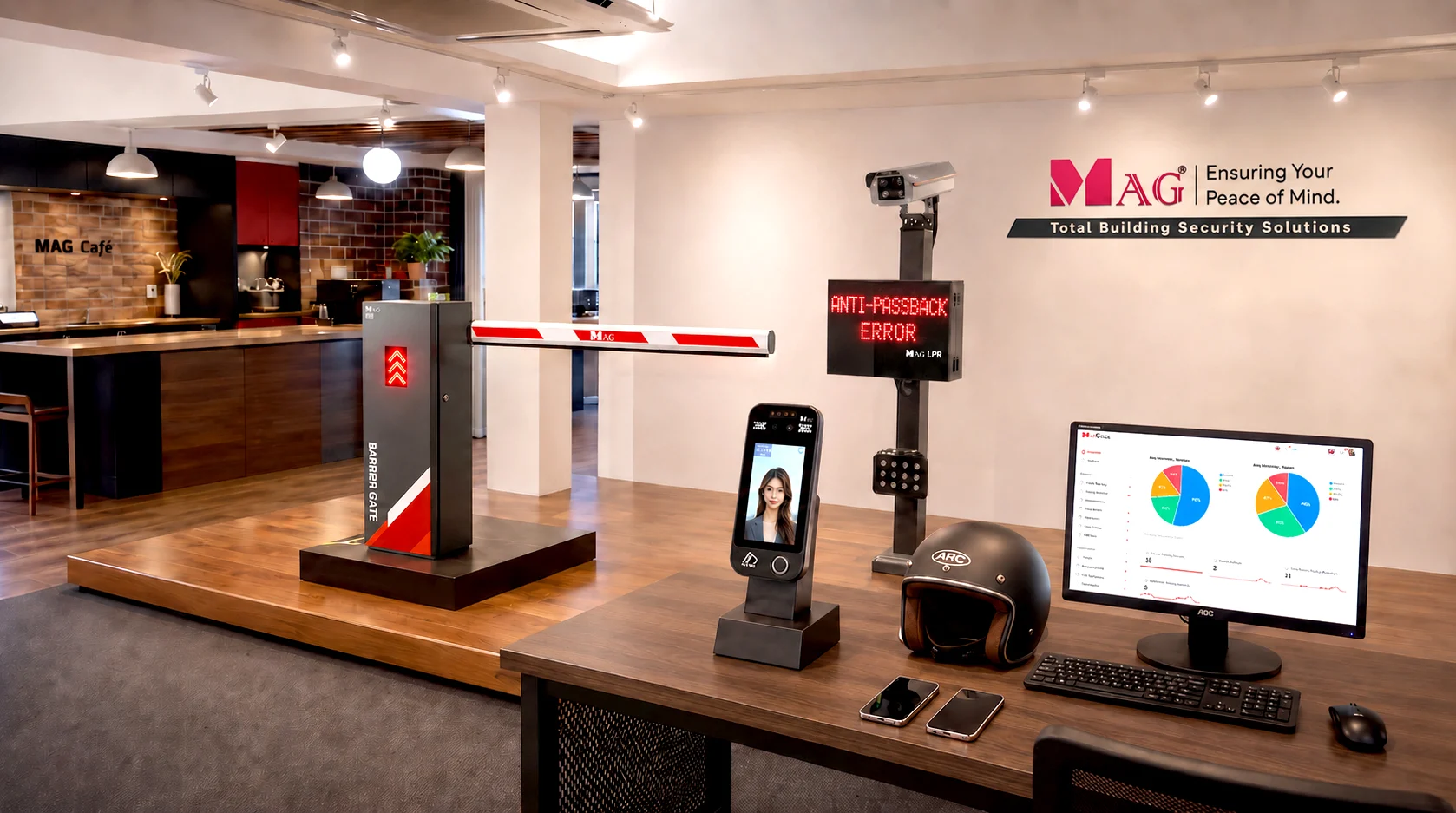
- See it.
- Touch it.
- Experience it.
Book a live demonstration with your nearest MAG dealer.
Frequently Asked Questions
1. How does AIGH address visitor data privacy?
AIGH helps the factory collect only the visitor information required for access, approval and safety records. Visitor data can be managed according to the factory’s own privacy policy, retention period and authorised user access. The factory remains responsible for defining how long records are kept and who is allowed to view them.
2. What if we still need to keep a visitor’s MyKad image?
The visitor workflow can be configured according to the factory’s operating policy.
However, the factory should first determine whether storing the full MyKad image is necessary. In many cases, visitor identity, host approval, safety acknowledgement, check-in time and entry evidence may already provide the required traceability without keeping unnecessary personal data.
3. Why use face recognition for motorbike riders instead of a rear LPR camera?
Motorbike plates may stop at inconsistent positions and angles, making reliable back plate recognition more difficult.
Face recognition verifies the rider directly, regardless of which motorbike is used. For riders wearing full-face helmets, fingerprint can be used as the fallback method.
LPR unable to reader QR. The same face reader also can be use to read QR code from delivery rider to save cost.
4. What happens if the internet connection is down?
The guardhouse does not need to become inoperable when the internet fails. LPR continues to operate with the pre-stored whitelist.
MagEtegra continues running the access logic and event monitoring on-premises. When internet resume, MagNicas provides cloud convenience for remote management. This hybrid design allows daily security operation to continue locally.
5. We already have a manual visitor log book. Why should we change?
A log book records what the guard wrote. It may not prove that the visitor:
-
- reviewed the correct safety policy;
- completed the required safety video;
- received all necessary internal approvals;
- acknowledged the requirements before entry;
- brought in the same equipment recorded at check-in.
AIGH creates a structured digital trail before, during and after the visit.
6. Can a signed paper safety form still protect the factory?
A signature alone may not show which version of the safety policy was presented, whether all required items were completed or when the acknowledgement happened.
A digital workflow gives management clearer evidence of the documents presented, approvals received and acknowledgement completed before access was granted.
7. What happens when top management investigates a visitor incident?
The responsible manager should be able to retrieve the approval history, safety acknowledgement, check-in time, host information and available entry evidence without searching through multiple log books and paper files.
AIGH helps the team answer with records instead of relying on memory or verbal explanations.
8. Does AIGH remove the factory’s safety liability?
No system can remove every risk or replace proper safety procedures.
AIGH helps reduce organizational exposure by making the visitor safety process more consistent, traceable and easier to prove. The factory must still maintain appropriate safety policies, training and site supervision.
View more questions
9. Will digital pre-registration slow down visitor approval?
It is designed to reduce delay.
The required approvers can receive notifications and approve through their mobile devices instead of waiting for physical forms to move between departments. Visitors can complete required safety items before arriving at the factory.
10. What if the visitor arrives without pre-registration?
The visitor can scan the special QR code on the wall to fill in their information in MagNicas online Walk-In registration form. Upon approval from the host, the visitor will receive the approved QR to enter the premise.
11. What if a contractor does not understand the safety document?
The factory can provide safety information using documents, pictures, videos or web links that suit its workforce and contractor profile.
The factory should prepare clear content in the languages and formats appropriate for its visitors. AIGH records the completion and acknowledgement; it does not replace the factory’s responsibility to make the information understandable.
12. Can AIGH record tools or equipment brought in by contractors?
Yes. The guard can capture equipment or item photos during check-in, subject to the configured workflow.
The host or maintenance manager can then view the visitor’s check-in status and supporting evidence for later verification.
13. Can it prevent truck or container loading fraud?
AIGH helps reduce fraud risk by keeping visual evidence.
The LPR event can be linked with additional front, side and rear images from IP cameras to record the driver, vehicle, container and load condition. This gives management stronger evidence for investigation and dispute handling.
It should be positioned as a fraud-risk reduction tool, not a guarantee that fraud can never happen.
14. Why not let every truck stop and register with the guard?
Manual registration may be acceptable for occasional vehicles, but it becomes a bottleneck when many approved trucks arrive.
Pre-registered plates allow approved transporters to enter faster, while the system records the event and images. The guard can focus on exceptions instead of repeatedly writing the same information.
15. Will automatic entry reduce security control?
Not when it is designed correctly.
Only pre-approved vehicles with valid access should be allowed automatic entry. Unregistered, expired, mismatched or exceptional vehicles should still be stopped for guard verification.
Automation should reduce unnecessary work without removing accountability.
16. Can AIGH integrate with our existing barrier gate and access system?
AIGH can integrate with existing barrier gate and coexist with existing access control system. AIGH just secure the entrance at guardhouse while existing access control will secure the building access. When existing access system is damaged, you have a option to upgrade with MAG’s latest face recognition reader or replace the same model card reader. This way, you are able to upgrade your existing building access card reader by stages as they fail.
17. Our existing barrier gate is still working. Why should we replace it?
A working barrier is not necessarily ready for higher-frequency automation.
The factory should consider:
-
- maintenance frequency;
- opening speed;
- reliability during peak traffic;
- spare-part availability;
- power-failure handling;
- whether repeated breakdowns will disrupt automated entry.
A smart entrance still depends on a reliable barrier gate to execute every access decision.
18. Why should we upgrade our old pedestrian gate?
An old gate may open after valid authentication but if it still allow tailgating, climbing, crawling or multiple people passing together it will defeat all the biometric accuracy benefit from the new AI face recognition reader.
For higher-risk or high-traffic factory entrances, the gate must control how many people enter with record for accurate report and audit trail, not only whether a reader received a valid credential.
This is where an AI Building Access pedestrian gate upgrade should be considered.
19. We already use cards for worker access. Why upgrade to face recognition?
Cards confirm possession of a credential, not necessarily the identity of the worker using it.
Face access can help reduce:
-
- card sharing;
- buddy punching;
- forgotten-card issues;
- cards retained after resignation;
- inaccurate attendance input.
For areas where face recognition is unsuitable, encrypted cards or fingerprint can remain practical alternatives.
20. Do we need to replace every card reader with face recognition?
No. A good design chooses the right identity method for each location. Face recognition may suit worker entrances and high-accountability areas, while encrypted cards may remain practical for lower-risk doors, restricted environments or users wearing protective equipment.
The objective is not AI everywhere. It is the correct control for each risk.
21. Can AIGH also manage staff, contractors and visitors in one system?
AIGH can connect different entrance journeys while keeping their permissions and records separate.
For example:
-
- staff enter by plate, face or fingerprint;
- contractors complete approval and safety requirements;
- visitors enter using valid QR access;
- trucks enter using pre-registered plates;
- guards handle exceptions and supporting evidence.
All of the above under one system.
22. Who should manage the system inside the factory?
The responsibility can be divided according to the factory’s operation:
-
- HR: staff enrolment and employment status;
- Facility or maintenance: contractor approval and site access;
- Security: check-in, verification and exception handling;
- Purchasing or logistics: transporter pre-registration;
- Management: reporting, policy and access oversight.
This avoids placing every task on the guardhouse.
23. Will the system create more work for our staff?
There is an initial setup and process change, but the objective is to remove repetitive work later.
Pre-registration, mobile approval, reusable workflows and digital records reduce repeated form filling, signature chasing, manual briefings and record searches.
24. Is AIGH suitable for an SME factory?
Yes, when it is implemented according to the factory’s actual risk and traffic volume.
An SME may begin with visitor pre-registration, safety acknowledgement, LPR and basic access workflows, then add more advanced approval, truck evidence or building access functions as its requirements grow.
25. Is AIGH suitable for an MNC factory with stricter compliance requirements?
AIGH can support more structured workflows, multiple approvers, visitor safety content, access validity, evidence capture and on-premises operation.
The final design should still be reviewed against the MNC’s internal security, IT, legal, audit and data-governance requirements.
26. What is the risk of continuing with the current manual process?
The factory may continue operating, but the hidden weaknesses remain:
-
- incomplete safety acknowledgement;
- approvals that are difficult to trace;
- slow guardhouse processing;
- missing entry evidence;
- inconsistent handling by different guards;
- records that are difficult to retrieve during an investigation.
The problem often becomes visible only after an accident, dispute, loss or management enquiry.
27. Why should we act before an incident happens?
After an incident, improving the process may be too late to answer what happened before entry. It is not worth the risk to affect the “zero accident” reputation maintain up to now.
The safer time to strengthen visitor approval, safety acknowledgement and entrance evidence is before management, auditors or investigators ask for proof.
Not sure which part of your factory entrance should be upgraded first?
Book a live AIGH assessment with an authorized MAG dealer to review your visitor, contractor, truck, motorbike and worker access workflows.